Insights • Article
Inside the Design Lab: testing the future of IFS with the people who use it
We put prototypes in front of customers at IFS Unleashed 2026 in Orlando. Here is what they told us about AI, desktop versus web and staying in control.
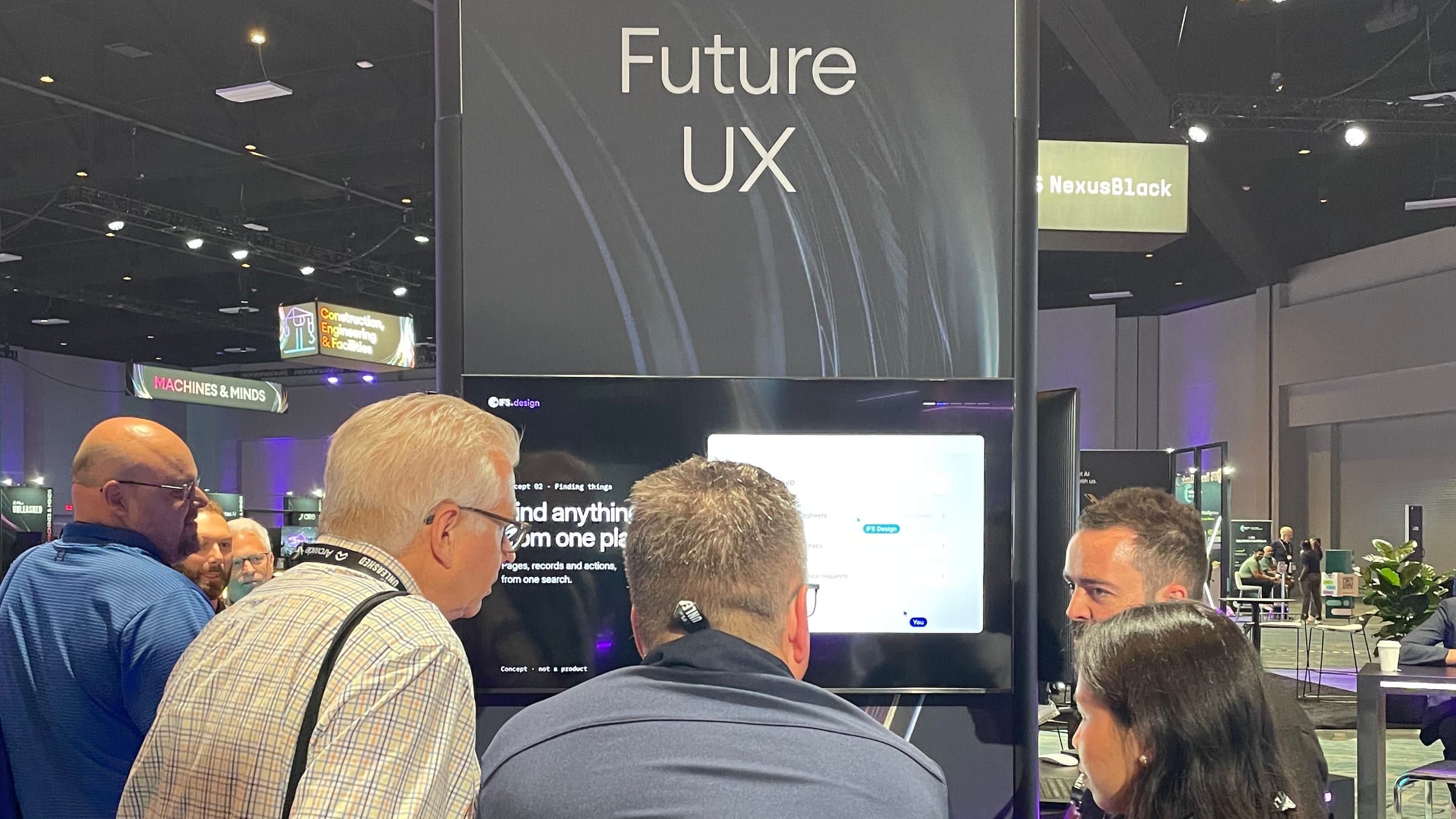
Something critical is stuck and holding up the pipeline. Your job is to use the tool in front of you to find out why. It’s a situation our users face daily.
That was the scene at the IFS Design Lab at Unleashed 2026 in Orlando, where the team put prototypes in front of attendees to test concepts, interactions and the future of IFS products. Over two days, about 50 visitors took part. They told us what they need from our software today, and their hopes and apprehensions as AI agents start to replace traditional interfaces.
Why we were there
We went to Unleashed to meet customers face to face, hear how they work in their own words, and show them the design process behind IFS products. Testing clickable prototypes with AI-assisted concepts before we build them allowed us to grow our testing panel with real, engaged users.
What we showed
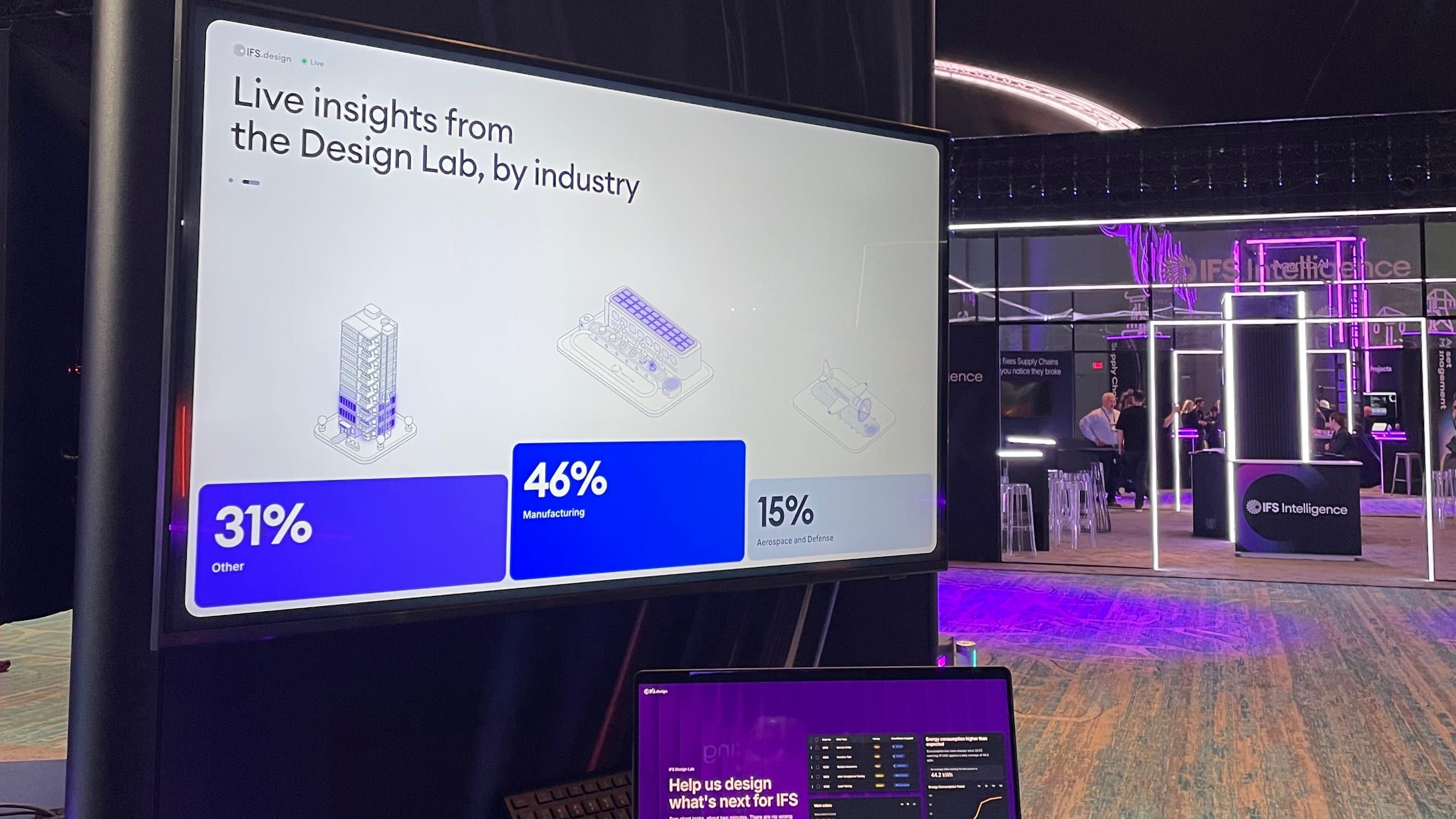
Visitors could try two prototypes at the booth:
- Tables vs AI test. Visitors worked in a prototyped version of IFS Cloud screens: something was stuck, and they had to find the right piece of information to answer a question and get the pipeline moving again. On the first day everyone had the same aircraft maintenance task; on the second, the task matched their industry. They tackled the problem two ways, first with the familiar tables and filters, then by asking IFS Intelligence.
- Desktop app test. A concept for IFS as a desktop app, with tabs, one window for every app, split view, search, IFS Intelligence and the option to approve work that agents had prepared.
The example screens used fictional data, and the AI replies were scripted for the showcase.
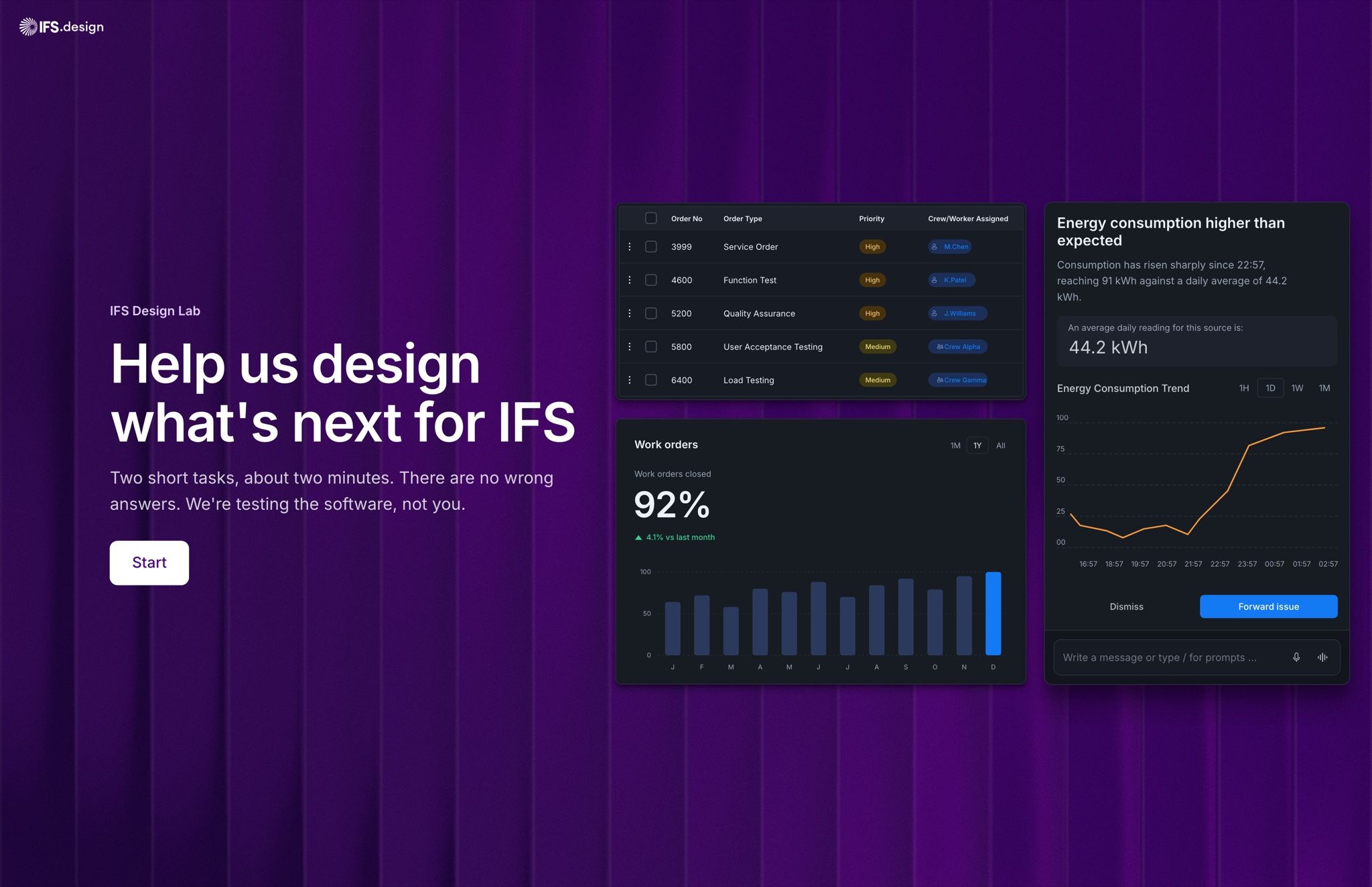
To draw people in and make the booth feel alive, a second screen showed live insights throughout the two days. As each visitor finished, the results updated in real time, showing the breakdown of industries and high-level metrics. Passers-by could see what was happening before they engaged. It got people talking.
What we learned
- Visitors
- 50~
- Days
- 2
- Prototypes
- 2
Of the visitors who finished the Tables vs AI test, 46% work in manufacturing, 15% in aerospace and defense and 8% in construction and engineering. The other 31% came from other industries.
Tables vs AI
- 77% would rather use AI in their day-to-day work. Nobody chose the tables; the rest chose neither.
- Those who found the answer got there more than twice as fast with AI: 44 seconds on average, against 102 seconds with tables.
- It felt easier too. Asked how easy the task was, out of 5, people gave AI 3.7 on average and the tables 2.6.
- AI didn’t get more people to the right answer, though: 62% found it with tables and 54% with AI.
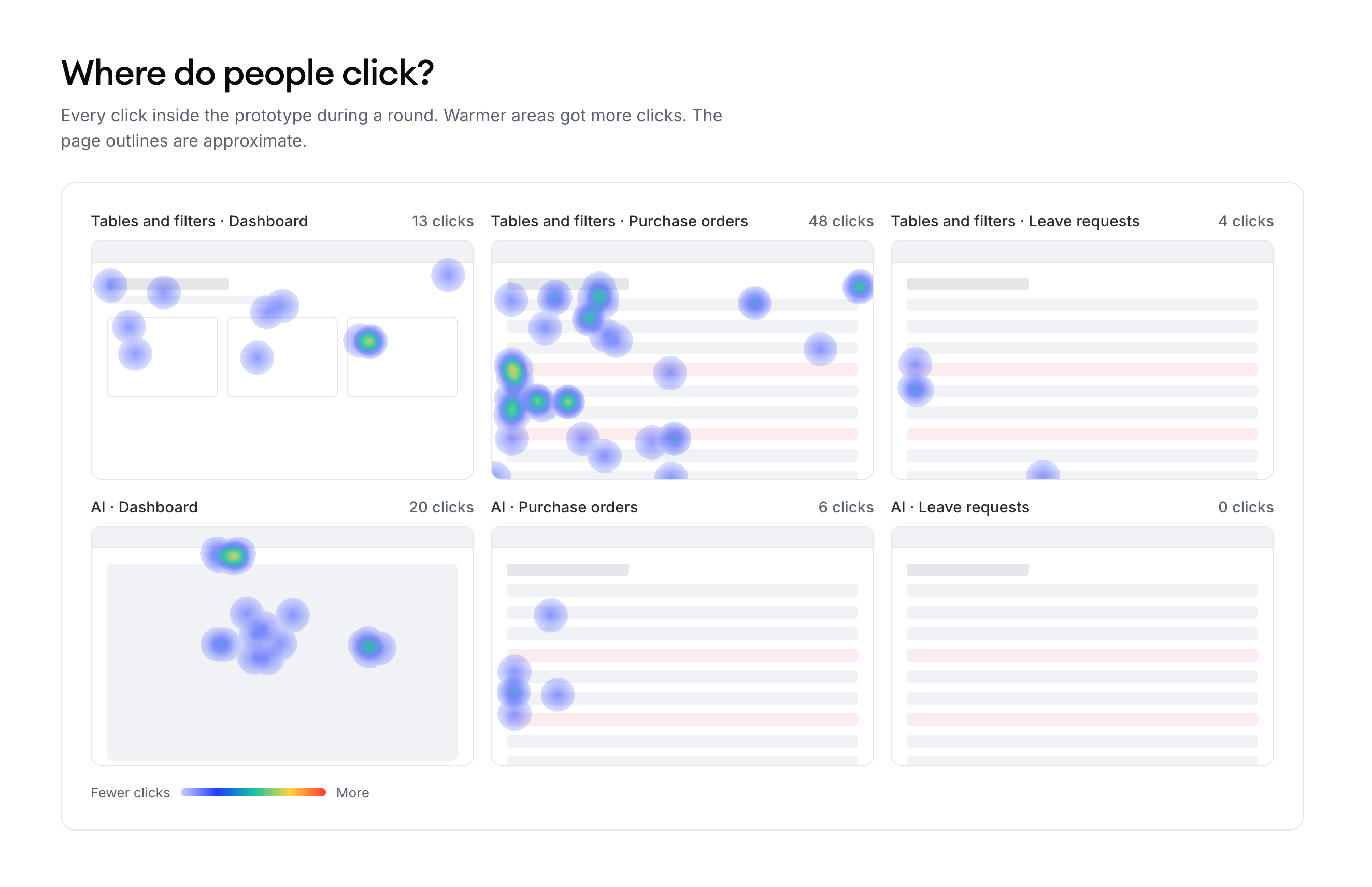
- Where people struggled was getting started. Nearly everyone who asked IFS Intelligence a question found the answer, and everyone who gave up in the AI round had not asked it anything. They still said they’d rather use AI.
- There were too few visitors from each industry to compare them. The second day, with the task matched to each industry, went better: everyone who finished it found the answer both ways.
Desktop app
- 85% said a desktop app would help, and the same share said one window for every app would help.
- 77% want routine work prepared for them to approve. Most still want control, though: 62% wanted an agent to ask first before it posts a supplier invoice.
- What would make it worth it: several windows across screens, 67%; faster to open, 58%; AI running on the device, 50%.
- Concerns came up too: cost, and installing apps on customer machines.
What’s next
The message was clear. Customers are curious about AI and open to new ways of working, as long as it saves them time and they stay in control.
That gives us a strong starting point for the next round of research, and a group of engaged users ready to help us shape it.